
Real-Time Rapid Control Prototyping of Industrial Systems using xPC Target (1.2 CEUs)
8:00am - Registration and coffee (1st day only)
8:30am - Session begins
4:30pm - Adjournment
Breakfast, two refreshment breaks and lunch are provided daily.
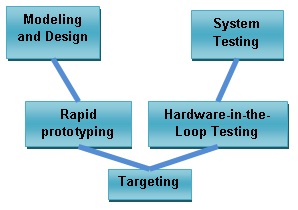
Rapid Control Prototyping or RCP is a process which lets the engineer quickly test and iterate their control strategies on a real-time computer with real input/output devices.
Rapid control prototyping (RCP) is now the typical method used by engineers to develop and test their control strategies.
Key Features
- Real-time execution of Simulink and Stateflow models on a target computer via an optimized real-time kernel
- Support for target computer hardware, including PMC, PCI, PCIe, cPCI, and PC104 form factors
- Support for numerous I/O modules, including analog I/O, digital I/O, pulse train generation and capture, and shared memory
- Support for communication protocols and data buses, including serial, UDP/IP, CAN, J1939, ARINC 429, and MIL-STD-1553
- Tools for real-time monitoring, parameter tuning, and data logging
- Standalone operation using xPC Target Embedded Option
Objectives
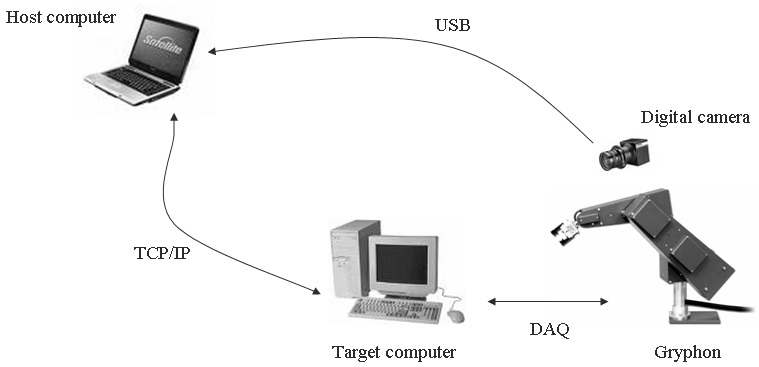
This two-day course focuses on rapid prototyping and HIL using xPC TARGET for distinct disciplines. The course will cover real time control concept, applications and importance of rapid prototyping, xPC Target tool box, overview of D/A, A/D, DIO and DAQ cards, architecture of xPC Target, a review on net configuration, execute code and interact with real time process, and a practical application.
Pre-requisites
A basic working knowledge of process control and applications is useful, but is not essential.
This workshop is designed to be accessible to all those involved in test systems, rapid prototyping, and HIL system technology in diverse aspects of industry, from electrical, control, communication, oil and gas to medical systems.
This includes (but is not limited to) engineers, researchers and technicians involved with:
- Control and instrumentation
- Oil and gas
- Electrical engineering
- Process control
- SCADA and telemetry systems
- Research, design and development of test systems
- Process development
- Control systems
- Biomedical systems
- Electromechanical system
- Mechatronics
- Construction engineer
- Monitoring
Day 1
Introduction
- Real time control
- Rapid prototype control
- HIL control
- Applications in distinctive industries
Review on:
- Matlab
- Simulink
- TCP/IP
- D/A, A/D, DI/O
- DAQ cards
Case study (motor control)
- Matlab and Simulink modeling
- PID Controller design
xPC Target
- The Architecture of xPC Target
- Generate real time code and download to computer
- Execute code and interact with real time process
- Setting up xPC Target
- Setup compiler
- Test your xPC setup
Day 2
Create Simulink Model
- Encoder Details
- D/A Details
- PD Controller Details
- Configure for Compile (1-runtime)
- Configure for Compile (2-compile)
- Configure for Compile (3-data log)
- Compile and Download
- Execute via GUI
- Monitor Signals via GUI
- Data Logging via GUI
- Execute via Command Line
- Data Logging via Command Line
- Parameter Tuning via Command Line
- Execute and Parameter Tuning via Simulink
- Execute in standalone mode
- Execute via web server
Case study (motor control, encoder, driver)
- Hardware selection
- Simulation
- PID Controller design
- Simultaneous simulation and implementation
- Parameter Tuning via Command Line
- Execute and Parameter Tuning via Simulink
After Attending This Course You Will Be Able To:
- Understand the concept of rapid prototyping, real-time, HIL of the system
- Recognize the requirement I/O DAQs for specific application
- Design a sampling program using Simulink and MATLAB
- Understand Host and target computer and different approaches for their connection (TCP/IP, serial,..)
- Design a real time program using Simuling run in external mode
- Monitoring, data logging and control a real plant using xPC Target
 Iraj Hassanzadeh, Ph.D. is visiting professor with the Department of Electrical & Computer Engineering at the University of Alberta, Edmonton, working on haptics and teleoperation control using Phantom haptic devices. He has been working as a Postdoctoral fellow in Mechatronics and Robotics fields at Ryerson University, Toronto, Canada for almost two years.
 TLNT reserves the right to cancel or change the date or location of its events. TLNT's responsibility will, under no circumstances, exceed the amount of the fee collected. TLNT is not responsible for the purchase of non-refundable travel arrangements or accommodations or the cancellation/change fees associated with cancelling them. Please call to confirm that the course is running before confirming travel arrangements and accommodations. Please click here for complete policies.
We could offer any of our courses at a location of your choice and customized contents according to your needs, please contact us at: [email protected] or click here to submit an online request.
Reviews
Interested in this course?
Click HereStart time: {{ sessionStartTimeWithZone(session) }}
{{ timeZoneCaptionFromSettings() }}
There are no future dates for this course

Jumpstart your training with the help of Talented Technology Training Canada (TTT-Canada) & the Canada Job Grant.
Seminars and Workshops offered within your organization anywhere in the world.
Get notified of our upcoming early bird discounts.
Submit this form for no-obligation course inquiries. One of our agents will contact you at the email or phone you enter below.