
Slab on Ground Design Workshop (1.2 CEUs)
The course will be offered in 2027 on the following dates:
June 25 & July 2–3 & 9, 2027
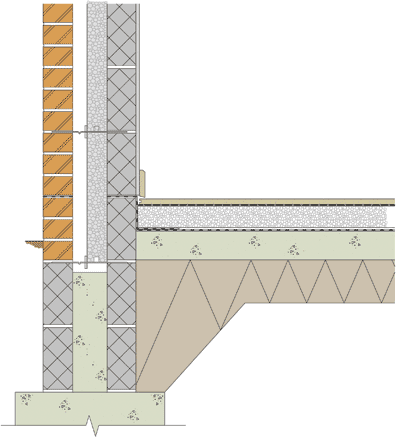
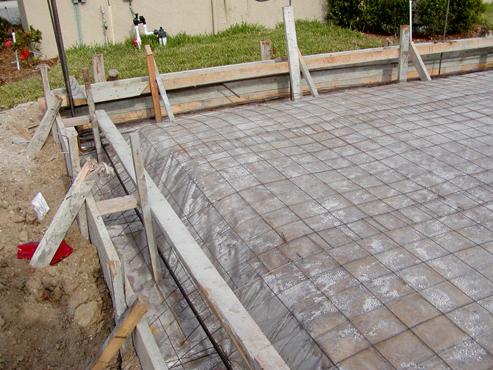
This course is a practical structural design course that contains step-by-step procedures that include instructions that help understand and design for slab on ground. This course presents information on the design of slabs-on-ground, primarily industrial floors. The course addresses the planning, design, and detailing of slabs. Background information on design theories is followed by discussion of the types of slabs, soil-support systems, loadings, and jointing. Design methods are given for unreinforced concrete, reinforced concrete, shrinkage-compensating concrete, post-tensioned concrete and fiber reinforced concrete slabs-on-ground, followed by information on shrinkage and curling problems. Advantages and disadvantages of each of these slab designs are provided, including the ability of some slab designs to minimize cracking and curling more than others. Several design methodologies will be introduced including the ACI design methodology. Examples using several design methods are also provided.
|
Objectives:
This course will provide the participants with an understanding of the subgrade drag theory and how it relates to the reinforcing of slab-on-grades as required to help control shrinkage cracking. Two other alternate design methods are also discussed relative to the sizing of "distribution" slab-on-grade reinforcement. Different types of reinforcing materials are also discussed including welded wire fabric, conventional deformed reinforcing bars and post-tensioning tendons. Target Audience
|
 |
 |
Learning Outcomes
|
Dr. Gamal Abdelaziz, Ph.D., P.Eng

Dr. Gamal Abdelaziz, P.Eng, MSc. has a Ph.D. in Geotechnical Engineering from Concordia University, Montreal, Canada.
Dr. Abdelaziz has served as a senior geotechnical engineer at DST Consulting engineers, Sarafinchin Consulting engineers, Trow Consulting and EBA engineering. Currently he is a Principal geotechnical engineer and managing director with SAGA Engineering, Edmonton, Alberta. His duties include revision of geotechnical design, including slope stability, foundation and machine foundation design, soil investigation, design of cuts and earth fills, evaluation of stability of existing slopes, slope reinforcement using geotextiles, geogrids, soil nails, base reinforcement to support earth fills on soft subgrade soils, erosion protection using geocells matting, rip rap, stabilization of unstable slopes, evaluation of soil bearing capacity to support footing foundations, settlement studies, deep foundations including driven piles, auger injected (CFA) piles, additional support to existing foundations by underpinning utilizing concrete panels, grouting, micro piles, evaluation of earth pressures on retaining walls, security of excavation base, tieback support, etc.
Dr. Abdelaziz has over 35 years of experience in geotechnical and structural engineering and water resources management, foundation design, teaching, research and consulting in Canada and overseas.
Dr. Gamal has designed and delivered over one hundred geotechnical/water resources engineering workshops which are well received by practitioners' engineers in Canada and globally.
Highly energetic proactive accomplished Civil Engineer with 35+ years of Canadian/International experience in Civil Engineering design and construction management. Work includes linear infrastructures, aviation-related projects, military, industrial, institutional, commercial buildings, tunnels design and construction, foundation and geotechnical engineering, slope stability, tailing and dams design and analyses, environmental site assessment and bridges design. Strong expertise in geotechnical engineering techniques and project/construction management methods. Exceptional leadership/team builder and management skills, experienced working with multi-national teams, managed up to 200 technical team members. Thorough knowledge of building codes and standards. Mega projects management experiences. The projects sizes ranged up to 150 B USD.
Dr. Abdelaziz has served in top leadership positions as Program Director, Technical Director, Design Director and Program Director in several of the largest engineering firms in the world – WSP and SYSTRA Corporations.
While his achievements are numerous, some highlights include supervising the design of a capital budget of up to USD $150B under the NEOM Corporation, Saudi Arabia. He developed new clients and provided technical leadership and project management according to the company's global business strategy. Established a full engineering operating firm and developed the business for a new engineering firm including developing the operating model and services. He also holds three degrees to further specialize his knowledge: Ph.D. in Civil and Geotechnical Eng. from Concordia University, Montreal, Canada, M.S. in Geotechnical/Structural Eng. & B.S. in Civil Eng.
Dr. Abdelaziz is a former adjunct professor at University of Western Ontario, London, Ontario, Canada, visiting professor at Ryerson University, Toronto, Canada and part time professor at Seneca College, Toronto, Canada.
Dr. Abdelaziz is specialized in numerical modeling for solving sophisticated geotechnical engineering problems with respect to pile foundation and the linear and nonlinear analysis of soil-structure interaction. He designed charts to predict pressures acting on tunnels and developed an analytical model for pile bearing capacity prediction.
Dr. Abdelaziz authored a number of technical papers and delivered numerous internal and external workshops on various geotechnical and Municipal engineering topics. Dr. Abdelaziz has been involved in a number of projects in Canada and overseas, such as tunneling, silos, buildings, retaining structures, siphons, irrigation networks and many other civil engineering projects in terms of design and construction.
|
Introduction
Loads
Joints
Thickness determination
|
Structural slabs-on-ground supporting building code loads
Design Examples
|
TLNT reserves the right to cancel or change the date or location of its events. TLNT's responsibility will, under no circumstances, exceed the amount of the fee collected. TLNT is not responsible for the purchase of non-refundable travel arrangements or accommodations or the cancellation/change fees associated with cancelling them. Please call to confirm that the course is running before confirming travel arrangements and accommodations. Please click here for complete policies.
We could offer any of our courses at a location of your choice and customized contents according to your needs, please contact us at: [email protected] or click here to submit an online request.
Reviews
Interested in this course?
Click HereStart time: {{ sessionStartTimeWithZone(session) }}
{{ timeZoneCaptionFromSettings() }}
There are no future dates for this course

Jumpstart your training with the help of Talented Technology Training Canada (TTT-Canada) & the Canada Job Grant.
Seminars and Workshops offered within your organization anywhere in the world.
Get notified of our upcoming early bird discounts.
Submit this form for no-obligation course inquiries. One of our agents will contact you at the email or phone you enter below.